

About HRV Fit Ltd.
HRV Fit Ltd. is an international software and biosensor development company. Founded in 2009, we focus on providing athletes, health enthusiasts, medics and researchers with tools to maximise their training efforts and improve performance, enjoyment and health. HRV Fit Ltd’s first app, ithlete, is the only HRV app and sensor combination to be independently validated, and now has in excess of 25,000 users, including elite level teams. ithlete has been used successfully in multiple medical, pharmaceutical and armed forces research studies.
Reviews and praise for ithlete have appeared in numerous magazines including Sunday Times Top App List, Cycling Weekly, Cycling Plus, Triathlon Plus, 220 Triathlon and Runner’s World.
In addition, we have partnered with Training Peaks to provide educational material, courses and conference presentations on the use of HRV in sports training.
Following a successful pilot study in 3 London hospitals, in 2018 HRV Fit was awarded a UK Govt grant to develop a new home monitor for Heart failure patients to reduce unnecessary rehospitalisation.

Where ithlete began
Founder Simon Wegerif explains in his own words how ithlete was designed in response to an athlete’s genuine need to train smart.
Like many endurance athletes – runners, cyclists and triathletes – I used a heart rate monitor. It helped me measure how hard my body was working during training as well as keeping me just to the right side of the red line during competition. Since I wasn’t getting any younger and I liked to keep pace with the top local, and yes, younger riders, I began investigating smarter training methods that would improve my performance but without the risk of injury due to overtraining. This is how I found out about heart rate variability (HRV).
In time, I became convinced that I needed to incorporate HRV as part of my own athletic training. So I looked around to see what commercial products were available and came to the conclusion that there was not an easy-to-use, affordable product that could give a direct and daily measure of HRV together with visual aids to interpretation such as traffic light training indicators and trend charts. But all was not lost. As an engineer by profession, building an HRV system did not seem particularly daunting.
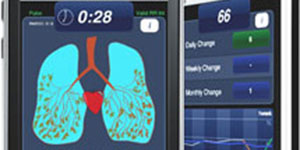
During 2009, I read over 500 research papers on HRV and consulted with many experts, cardiologists, coaches and trainers. My device had to be scientifically valid, practical, and uncomplicated to use. During this research, and following patent applications in the US, UK and EU, I was subsequently invited to establish sports and medical research collaborations on HRV application in cardiac rehabilitation and elite sports training.
Since this time I’ve continued to follow the latest heart rate variability (HRV) scientific studies and papers ensuring that ithlete follows current best practice.
Development and progression
HRV Fit Ltd. is committed to continuous development of the company and all of our products – sensors, mobile and web apps. HRV Fit has also created custom variations of the patented ithlete application for trainers in specific sports. We have supplied custom apps and hardware for corporate wellness initiatives such as the Federally approved Moove program in Germany, and ithlete is currently involved in trials research and clinical trials.
About us – The faces behind ithlete

Simon Wegerif
Managing Director

Lindy Wegerif
Director of Customer Services

Tom Hayhoe
Business & Strategy Adviser

Ian Bisset
Development consultant
Keep up with our news…
Check out our Blog to be the first to hear what’s happening at ithlete and the latest developments.
Feedback, comments and suggestions for improvement are also very welcome – just click Contact us.